Roman-era kitchen unearthed in northern Spain reveals imported pottery and culinary tools
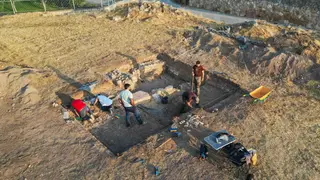
Excavators at the ancient city of Segisamo in Sasamón, Burgos, have uncovered a Roman kitchen dating back two millennia. The dig, led by researchers from the University of Salamanca and the Institute of Archaeology of Mérida, marks the tenth year of fieldwork at the site. The find includes Italian pottery and cooking implements, shedding light on daily life in Roman Spain.
The discovery at Segisamo, a Roman town in modern-day Burgos, offers a rare glimpse into domestic routines of the empire's provincial inhabitants. The kitchen, preserved for roughly two millennia, was found during the tenth consecutive excavation season by a joint team from the University of Salamanca and the Mérida archaeology institute. Its contents—including fine Italian pottery and various cooking utensils—suggest that even remote households maintained connections to broader Mediterranean trade networks. Such artifacts help researchers reconstruct not only culinary practices but also social and economic interactions in Roman Spain.
This find could deepen public understanding of everyday life under Roman rule, moving beyond monuments to intimate household settings. It may also boost local heritage tourism in Sasamón, drawing visitors and supporting regional identity. For scholars, the imported pottery offers potential evidence of long-distance commerce and cultural influence, possibly refining current models of provincial economy. Educators could use the discovery to make ancient history more tangible, while the ongoing excavation underscores the value of sustained archaeological investment.