Roman altar dedicated to Fortuna Redux goes on display in England
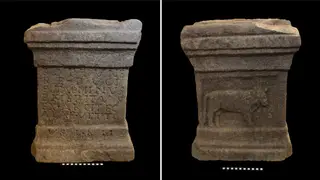
A Roman altar honoring the goddess Fortuna Redux, protector of safe homecoming, will be exhibited in Bishop Auckland this autumn. The stone was discovered in 2013 during excavations at Binchester Roman Fort in County Durham and dates to around CE 275. It was dedicated by a retired military architect named Eltaominus, likely in gratitude for surviving a perilous journey.
The altar, carved around CE 275, was unearthed in 2013 at Binchester Roman Fort, a key outpost near Hadrian’s Wall. Its dedicant, Eltaominus, was a retired military architect—a role that would have involved surveying and building across dangerous frontier terrain. The inscription honors Fortuna Redux, a goddess specifically invoked for safe return from travel, suggesting the dedication was a personal vow fulfilled after a hazardous journey. The stone now offers a rare glimpse into the religious practices of auxiliary soldiers and veterans in Roman Britain, where such votive objects were common but rarely so well-documented. Its display in Bishop Auckland this autumn will place it alongside other finds from the fort, helping visitors connect with the daily concerns of those who served on the empire’s northern edge.
This artifact may deepen public engagement with Roman Britain beyond military conquest, highlighting personal faith and occupational risk. Local museums and heritage sites could see increased visitation, benefiting regional tourism and education. For historians, the altar reinforces how votive dedications served as emotional records, potentially encouraging broader interest in epigraphy. Its display may also prompt discussions about the preservation and accessibility of archaeological finds, though its direct societal impact remains modest—primarily enriching cultural appreciation rather than altering policy or daily life.