Neptune Reaches Opposition: Best Time to Spot the Ice Giant
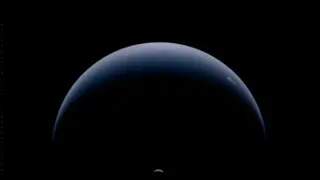
Neptune will reach opposition on September 26, appearing opposite the Sun and at its closest to Earth for the year. The planet, shining at magnitude 7.6, will be visible as a small blue-gray disk in the constellation Pisces. This year's opposition is particularly favorable for observers in both hemispheres, as Neptune sits near the celestial equator.
Neptune's 2026 opposition carries historical resonance, as the planet was first identified through mathematical prediction rather than direct observation. French mathematician Urbain Le Verrier calculated its position from irregularities in Uranus's orbit, leading to its discovery in September 1846—nearly 180 years to the day before this year's opposition. Interestingly, Galileo had unknowingly recorded Neptune as a faint star near Jupiter in 1612 and 1613, centuries before its official recognition.
This year's viewing geometry is unusually favorable, with Neptune positioned near the celestial equator, making it accessible to observers across both hemispheres. At roughly 4.3 billion kilometers from Earth, the ice giant remains four light-hours away, yet its slow orbital motion—one circuit every 165 years—allows patient observers to detect its movement against background stars over successive nights.
This opposition offers amateur astronomers and casual stargazers a rare accessible opportunity to observe the solar system's most distant planet, potentially inspiring renewed public interest in planetary science. Educational institutions and science communicators may leverage the event to highlight how mathematical prediction and observation work together in modern astronomy. The favorable viewing geometry could also encourage international participation in citizen science projects, fostering broader appreciation for space exploration without requiring expensive equipment.