Gazans view Israeli election with dread and skepticism
Palestinians in Gaza are closely following Israel's upcoming election but expect little change in their lives. Many fear a Netanyahu government would continue policies of forced displacement, while frontrunner Gadi Eisenkot also supports settlements and opposes a two-state solution. The vote is set for October 27.
The October 27 vote follows three years of war that has killed more than 70,000 people and displaced nearly all of Gaza's population. A ceasefire declared on October 10 has not stopped the violence, with at least 1,399 additional deaths reported since. Frontrunner Gadi Eisenkot served in Netanyahu's government during the war's first eight months and backs West Bank settlements while rejecting a two-state solution.
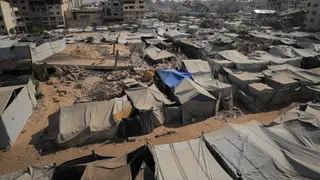
Displaced residents like Maryam al-Dabala, forced to move 14 times, and Osama al-Arbaei, who lost nine family members in a bombing of his Gaza City home, express little hope for change. Al-Arbaei said any new government would only adjust "margins" while the core policy toward Gaza remains unchanged.
The election outcome could shape Gaza's immediate future, particularly regarding aid access, displacement policies, and the fragile ceasefire. A far-right government may accelerate forced displacement efforts, while even a moderate victory appears unlikely to alter settlement expansion or opposition to Palestinian statehood. Displaced families, already living in tents and schools with scarce medicine and food, may face further deterioration in conditions. The broader impact could extend to regional stability, as Gaza's trajectory influences neighboring states and international diplomatic efforts.