Tech Selloff and Yield Spike Pressure Stocks
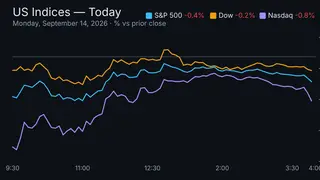
Stocks opened the week lower as hawkish Fed expectations and geopolitical tensions dampened risk appetite. The Nasdaq led declines, dropping 0.56%, while the S&P 500 and Dow also fell. Semiconductor stocks plunged after tech leaders called for a slowdown in AI development, while energy rose on supply disruptions.
The 10-year Treasury yield touching 5.0% for the first time since 2023 marks a critical threshold for rate-sensitive equities, amplifying the tech sector's losses. The AI hardware selloff contrasted sharply with software strength, as investors rotated away from capital-intensive semiconductor names following the Anthropic CEO's essay. Geopolitical risk added another layer, with Saudi Arabia's pipeline closure after drone attacks pushing crude above $102 and threatening global supply.
Bank of America's 5.1% drop on CEO Brian Moynihan's warning of a 10% decline in Q3 investment banking and trading fees dragged financials lower. Markets now face a dense central bank week, with the Fed, Bank of England, and Bank of Japan all scheduled to announce decisions. Futures pricing shows a 90% probability of a 25-basis-point Fed hike following sticky August CPI data.
This selloff could ripple broadly through household finances. Higher Treasury yields typically translate to costlier mortgages, auto loans, and credit card rates, affecting borrowers directly. Tech-heavy retirement portfolios may see near-term volatility, while the AI development slowdown debate could reshape investment strategies for funds heavily allocated to semiconductor stocks. Rising crude prices may push gasoline and heating costs upward, straining consumer budgets. The Fed's decision Wednesday will likely set the tone for borrowing costs into year-end, with implications for housing, business expansion, and discretionary spending across the economy.