Foreign Trawlers Deprive West Africa of Vital Seafood Nutrients
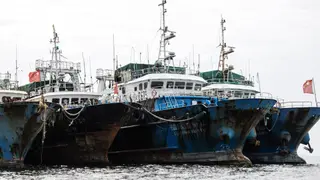
New research from Oceana shows that foreign-owned bottom trawlers are removing fish from West African waters that could supply essential nutrients to millions of people. The catch is largely exported, worsening micronutrient deficiencies in coastal populations that rely on seafood. The study highlights that payments for fishing rights do not compensate for the nutritional value lost.
The study identifies Guinea-Bissau, Guinea, Gambia, Liberia, Côte d’Ivoire, Sierra Leone, and Togo as the most affected nations, with Gabon, the Republic of the Congo, and Namibia also ranking high. These countries often receive licensing fees for foreign trawlers, but researchers argue such payments fall far short of the nutritional value lost when catches are exported or processed into animal feed. Bottom trawling, which produces over a quarter of global marine catch, also generates nearly half of all discarded fish worldwide due to its unselective nature.
Distant-water fleets from China, Taiwan, Japan, South Korea, and Spain account for ninety percent of such catches, heavily subsidized to remain profitable. The practice exemplifies governance imbalances, as local coastal communities—many relying on sardine species for food—see essential micronutrients like omega-3, vitamin B12, and zinc diverted to international markets, contributing to "hidden hunger" and related health issues such as anemia, developmental delays, and osteoporosis.
This research could reshape how fishing access agreements are evaluated, potentially pressuring governments and international bodies to prioritize local food security over short-term revenue. Coastal populations in West Africa may face worsening health outcomes if nutrient-rich catches continue to be exported, while policymakers could face growing scrutiny over subsidy programs that enable distant-water fleets. The findings may also influence consumer awareness and advocacy for more equitable fisheries management, though implementation remains uncertain.