Protein's scaffold role, not enzymatic activity, determines leukemia drug sensitivity, study finds
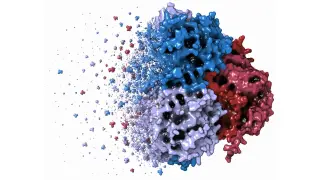
Researchers found that removing the protein NUDT5 protects cells from the leukemia drug 6-thioguanine, while simply blocking its enzymatic activity had little effect. This suggests NUDT5 acts as a molecular scaffold organizing cellular metabolism, influencing drug response. The discovery may help explain why patients respond differently to this 70-year-old treatment.
The study emerged from a collaboration spanning four research institutions, building on a 2025 Science publication that first identified NUDT5's scaffold function. Researchers developed a cell-based screening platform to accelerate degrader discovery, which guided medicinal chemistry efforts that ultimately produced dNUDT5, their most active degrader. They also created matched control compounds that could bind NUDT5 without triggering its destruction, enabling direct comparison between enzymatic inhibition and complete protein removal.
That distinction proved decisive: conventional inhibitors blocking NUDT5's catalytic activity did not meaningfully alter 6-TG response, while targeted degradation eliminating the protein entirely protected cells from the drug's toxic effects. Genetic experiments confirmed the chemical findings. This suggests NUDT5's physical presence as a scaffold organizing cellular metabolism—not its enzyme function—determines drug sensitivity.
This finding could reshape how researchers approach drug development, suggesting that targeting protein presence rather than enzymatic activity may be more effective for certain therapies. For leukemia patients, it may eventually help explain why responses to 6-thioguanine vary so widely, potentially enabling more personalized treatment decisions. The work also highlights targeted protein degradation as a promising strategy that could uncover hidden biological functions in other proteins, though clinical applications remain distant.