Mondev Tightens Acquisition Criteria for Montreal Rental Projects Amid Rising Costs
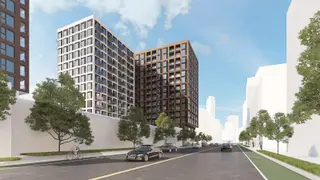
Mondev has started about 1,500 rental units annually in 2025 and 2026, but most of that activity stems from land bought years ago at lower costs. The company is now evaluating sites for 2028-2029 development and has sharply narrowed its criteria, refusing to accept permit or zoning risks. Rising construction costs and tighter margins have pushed the firm to favor larger, efficiently configured parcels that can support lower-rise building.
Mondev's current construction pipeline reflects land assembled years ago, when acquisition costs were more favorable. The company's Griffintown project, acquired in 2018, illustrates this pattern—a three-building site planned for roughly 750 units. Meanwhile, CMHC data shows rental housing reached a record 86% share of Montreal housing starts in the first half of 2026, though the pending-start pipeline has contracted, particularly on the Island of Montreal.
Altus Group estimates construction costs in Montreal rose at least 4% last year, with private developers showing weaker appetite as labour expenses and margins tighten. Cadillac Fairview's nearly 100-acre Carrefour Laval site, potentially accommodating 8,000 to 10,000 units, exemplifies the scale advantage Mondev now seeks—larger parcels allowing lower-rise construction with better efficiency and more room for infrastructure, parks, and affordable housing requirements.
The tightening of acquisition criteria by major developers like Mondev could slow future rental supply in Montreal just as demand remains strong. If fewer projects reach construction in 2028-2029, renters may face continued pressure on availability and pricing. Smaller developers without land banks may be disproportionately affected, potentially consolidating development among larger players. Municipalities may need to consider how zoning certainty and approval timelines influence project viability, since developers now explicitly avoid permit and zoning risk.