FedRAMP's New Vulnerability Rules Demand Continuous Compliance, Not Just Scans
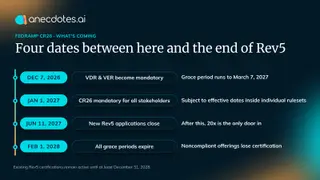
FedRAMP's upcoming VDR and VER requirements shift from monthly scans to continuous monitoring with tiered remediation deadlines, some as tight as 12 hours. Providers must assume exploits are automatable unless proven otherwise, and process failures count as vulnerabilities. The December 7 deadline marks a broader move toward automated compliance validation.
The new framework retires the monthly scan-and-POA&M model in favor of detection frequencies tied to certification class, ranging from every 14 days at Class A up to daily scans at Class D. Remediation deadlines scale with a vulnerability's PAIN rating and exploitability, with the most severe cases—Class D offerings facing likely exploited, immediately remotely exploitable PAIN-5 flaws—requiring fixes within 12 hours.
FedRAMP 20x fully supersedes Rev5, with all consolidated rules mandatory by January 1, 2027, and new Rev5 applications ceasing June 11, 2027. Providers must treat detection pipeline failures as reportable vulnerabilities, meaning the evidence-producing system itself falls under compliance scrutiny. The December 7 deadline represents the first installment of this broader transition rather than a standalone requirement.
The shift to continuous compliance validation could significantly raise operational costs for cloud service providers, particularly smaller firms lacking mature security automation. Government agencies relying on FedRAMP-certified offerings may see improved security posture, but 12-hour remediation clocks could create staffing pressures that ripple into service pricing. Organizations using these cloud services may ultimately benefit from faster vulnerability response, though the transition period could introduce compliance gaps as providers adapt their workflows and tooling.