New H5N1 Antibody Assay Works Across Birds, Cattle, and Humans
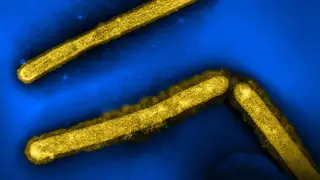
Researchers in Germany and the Netherlands have developed a luciferase-based double-antigen ELISA that detects H5N1 antibodies across a wide range of species, including birds, cattle, pigs, ferrets, and humans. The assay showed superior sensitivity in waterfowl compared to a commercial reference test and could detect responses in vaccinated cattle and humans at lower concentrations. This tool aims to improve surveillance at the human-animal interface as H5N1 spreads among mammals.
The assay's design centers on a luciferase enzyme that emits light when antibodies bind to H5 proteins, enabling detection with very small sample volumes. Validation included samples from waterfowl, domestic pigs, wild boar, ferrets, cattle, and humans, with particular strength in ducks, geese, and swans, where older competition-based formats often fail due to species-specific antibody differences.
The test also distinguishes between antibodies targeting the H5 head region versus the stalk region, allowing researchers to differentiate true H5N1 exposure from cross-reactive antibodies generated by seasonal flu vaccination. The researchers recommend pairing this assay with existing broader-reacting tests, especially in regions where multiple H5 clades circulate, since this version is optimized for the dominant clade 2.3.4.4b.
This assay could meaningfully strengthen surveillance at the human-animal interface as H5N1 expands its mammalian host range. Veterinary and public health agencies may gain a more reliable tool for detecting past infections across species, potentially improving early warning systems for farm outbreaks and occupational exposures. The ability to distinguish vaccine responses from natural infection could also inform monitoring programs, though the test's clade-specific optimization means it may need pairing with broader assays in regions with multiple circulating lineages.