Trump and Xi open White House talks with trade truce extended
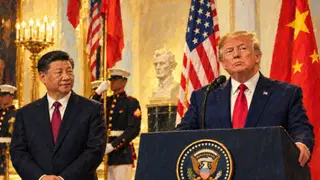
President Trump is hosting Chinese President Xi Jinping for a three-day state visit, with discussions expected to cover trade, technology, Taiwan, and Iran. The US and China have already agreed to extend the 'Busan agreement' through January 10, reducing the immediate risk of tariff escalation. Investors are watching for concrete progress on rare earths, export controls, and Taiwan arms sales, though no major outcome is assumed yet.
The Busan agreement extension through January 10 was announced by Treasury Secretary Bessent ahead of the talks, removing immediate tariff escalation risk. Discussions reportedly covered rare earth access, agricultural purchases, export controls on advanced technology, Taiwan arms sales, and potential Chinese cooperation on Iran. Xi offered symbolic gestures including an invitation for 100,000 U.S. youth to visit China and confirmed two pandas will settle at Atlanta Zoo.
Markets showed caution during the meeting, with the Dow down 0.39%, S&P 500 down 0.24%, and Nasdaq down 0.48%. Both leaders delivered warm opening remarks—Xi emphasized peaceful coexistence, regular military dialogue, and fair treatment for Chinese firms in the U.S.—but observers noted the comments lacked concrete commitments on the substantive disputes.
The outcome could shape global trade conditions affecting businesses, investors, and consumers who have weathered tariff volatility. A purely cordial meeting may steady markets temporarily, but unresolved issues around technology restrictions and Taiwan could resurface as friction points. Rare earth access affects electronics and defense industries worldwide, while any Iran-related progress might influence energy prices. Companies with China exposure may adjust supply chain strategies based on signals from these talks, and broader geopolitical stability could hinge on whether this dialogue builds lasting trust.