Hybrid AI Approach Extends Device Models to Cryogenic Temperatures
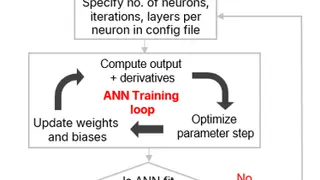
The article discusses using AI to accelerate quantum system design by developing accurate device models for circuit-level simulation. It highlights a hybrid ANN approach that extends compact models to cryogenic temperatures by learning residual behavior from measurement data. This reduces manual model-tuning effort and supports the scaling of quantum processors.
The article centers on a practical bottleneck in quantum system scaling: the supporting electronics—control, bias, and readout circuitry—must function at temperatures near absolute zero, yet standard compact models are built for room-temperature operation. Key parameters like threshold voltage and transconductance shift dramatically at 4K, and effects such as dopant freeze-out and altered band structure complicate physics-based modeling. The proposed workflow combines baseline BSIM-BULK extraction with a hybrid artificial neural network that learns residual deviations from cryogenic measurement data, reducing manual tuning. This approach leverages Keysight's ML Optimizer for derivative-free parameter extraction, addressing a gap where no standardized low-temperature compact models exist.
This workflow could meaningfully accelerate quantum processor development by shortening the design cycle for cryogenic control electronics, potentially lowering costs and time-to-market for quantum systems. If adopted broadly, it may help smaller teams without specialized cryogenic modeling expertise participate in quantum hardware innovation. However, its impact depends on measurement infrastructure access—cryogenic test setups remain expensive and specialized—so benefits may concentrate initially among well-funded labs and commercial players, potentially widening the gap between research institutions and industry leaders.