SpaceX Completes Starship Stacking Ahead of First Orbital Launch Attempt
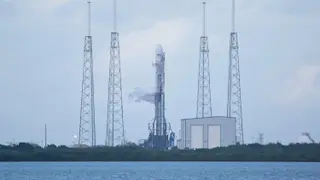
SpaceX has stacked Ship 41 atop Super Heavy booster B21 at Starbase, forming the 124-meter Starship vehicle for Flight 14. The company is awaiting an FAA license for a launch window that could open as early as September 28. The mission would mark Starship's first full orbital flight profile.
The 124-meter stack pairs a 52-meter upper stage with the Super Heavy booster, assembled using the launch tower's chopstick arms after Ship 41 was transported from a production site roughly three miles away. The flight profile would last nearly ten hours if the September 28 window opens at 7:15 a.m. CDT, though the FAA has yet to issue a license and no pad-area closures have been announced.
Meanwhile, the Starlink constellation remains stable at 11,154 satellites in orbit, with five vehicles tracked for planned deorbits. Seven Starlink units appear on conjunction watch lists, though none approach high-risk thresholds, and two flagged events carry suspect tracking data. The article also notes B1049, a retired Falcon 9 booster that completed ten missions, as a point of reference for SpaceX's reusable hardware lineage.
A successful orbital flight could validate Starship's fully reusable design, potentially lowering launch costs and accelerating deployment of large payloads, including further Starlink expansion. Commercial satellite operators and scientific missions may gain new scheduling options, while increased launch cadence could raise concerns about orbital congestion and debris risk. The outcome may also shape regulatory approaches to high-altitude flight licensing, affecting how quickly future super-heavy vehicles reach operational status.