KeepTrack Detects Possible Relocation of Chinese Satellite TJS-15
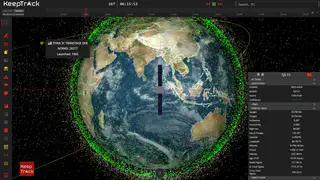
An automated KeepTrack notice reports a potential relocation of the Chinese satellite TJS-15 from 94.4°E to 88.7°E over 13 days. The event, detected on September 8, involved an estimated delta-V of 2.08 m/s and a semi-major axis change of -56.7 kilometers. The satellite now sits within 0.5 degrees of the active payload WGS F4 at 88.4°E.
The relocation brings TJS-15 to within 0.31 degrees of WGS F4, a US military communications satellite in the Wideband Global SATCOM constellation. The maneuver required a modest total delta-V of 2.08 m/s, with the semi-major axis shrinking by 56.7 kilometers and the orbital period shortening by nearly three minutes. Peak in-track offset reached roughly 4,482 kilometers during the transition.
TJS-15 launched in March 2025 aboard a Long March 3B rocket and is catalogued as a Chinese payload. The KeepTrack detection pipeline flagged this as a Tier 1 relocation event, though the notice remains unverified by an analyst. The forecast expects the satellite to hold its new slot within 0.5 degrees of 88.7°E over the coming week; a drift back toward 94.4°E would indicate the move was only one leg of a longer journey.
This close approach between a Chinese satellite and a US military communications platform could draw attention from space operators and policymakers concerned about orbital crowding and potential interference, whether accidental or deliberate. Analysts may watch for further maneuvers that suggest a pattern rather than a routine station change. The event also highlights how automated tracking systems are becoming essential for monitoring increasingly congested geostationary orbits, where even small adjustments can bring active payloads into close proximity.