Private space habitats prepare to take over from ISS after 2030
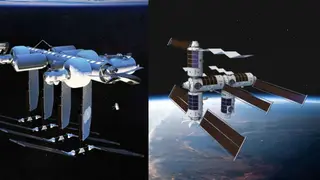
With the ISS set to deorbit in 2030, companies like VAST, Blue Origin, and Sierra Space are developing commercial space stations. VAST's Haven-1 is targeted for 2027, while Orbital Reef is a joint project. These habitats aim to continue human presence in low-Earth orbit for research and commerce.
The ISS's deorbit will send it into a remote Pacific area, with most hardware burning up and remnants sinking. VAST's Haven-1, targeted for 2027, is a single module with 45 cubic meters of space, hosting four-person, two-week missions via SpaceX Dragon. Its successor, Haven-2, will have nine modules, support twelve crew, and finish construction by 2032.
Orbital Reef, a Blue Origin and Sierra Space project, is pitched as a "mixed-use business park" at 250 miles altitude, featuring Sierra's inflatable LIFE module—a three-story, 27-foot-diameter structure with room for science, exercise, and crop growth. Axiom Station will first attach to the ISS, then detach to become free-flying, transferring research racks from the ISS.
The shift from the ISS to private habitats could democratize access to space research, potentially lowering costs for universities and startups while opening new avenues for commercial manufacturing and tourism. However, it may also concentrate control in a few corporations, possibly limiting international collaboration and creating economic barriers for smaller nations. The continuity of human presence in low-Earth orbit will depend on these ventures' reliability, affecting scientific progress and future deep-space missions.