Riyadh's Bet on Trump Fails to Secure Protection
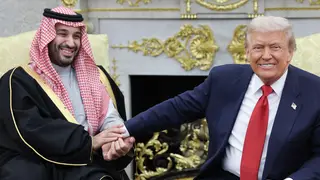
Saudi Arabia faces escalating threats to its oil infrastructure and shipping lanes, while its reliance on the United States as a security guarantor appears increasingly unreliable. The kingdom's investment in cultivating ties with Trump's political circle has not translated into the expected military support. As regional conflicts intensify, Riyadh's long-term strategic position is deteriorating.
The US-Gulf security arrangement, established after World War II, traded American military protection for basing rights and cooperation on oil flow stability. The 1990-91 Gulf War demonstrated this system's effectiveness when coalition forces safeguarded Saudi fields and liberated Kuwait. That arrangement collapsed following Trump's military action against Iran, leaving Riyadh without a viable alternative security framework.
Saudi contingency planning had relied on the East-West pipeline to bypass Hormuz, increasing throughput from roughly 1 million to 4-5 million barrels daily. However, Houthi attacks in July forced its shutdown, while Iranian forces block exports through the Strait of Hormuz and Red Sea shipping remains threatened. The kingdom's investment in cultivating Trump's political circle yielded no military commitment.
This breakdown could reshape global energy markets and regional power calculations. Oil-dependent economies may face supply volatility, while Gulf states might reconsider security partnerships or pursue independent defense capabilities. The perceived unreliability of US protection could embolden regional adversaries, potentially escalating conflicts that affect shipping, energy prices, and civilian populations across the Middle East and beyond.