Young orangutans learn food choices by observing peers, study finds
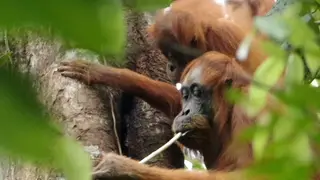
A long-term study of wild Sumatran orangutans found that young apes vary in how they learn about food, with some relying more on watching others and others on independent exploration. Those that spend less time figuring things out alone can still develop a broad diet by copying others. The findings suggest different learning strategies contribute to survival skills before independence.
The study tracked 21 young Sumatran orangutans over 12 years, recording nearly 7,000 learning events and over 4,700 hours of feeding observations. Individual learning varied widely among the apes, possibly reflecting personality or maternal care differences. Notably, after watching another orangutan, youngsters often spent about 145 minutes practicing with new objects or foods—similar to human children imitating demonstrated activities. Those with strong social learning but little independent exploration still achieved a reasonably broad diet, though the widest diets came from combining both strategies.
This research highlights the flexibility of learning pathways in a species with an exceptionally long childhood. Orangutans must master a complex rainforest menu—from easy leaves to tough, spiny fruits—before independence at around 8.5 years. The findings underscore that social observation can serve as a powerful substitute for trial-and-error, offering a buffer for individuals who are less inclined to explore alone.
This work could reshape how conservationists assess orangutan rehabilitation and reintroduction programs, particularly for orphans lacking maternal guidance. If social learning compensates for limited individual exploration, then designing enriched social environments for captive or rescued juveniles may be key to preparing them for wild diets. It also offers a broader lens on animal cognition, potentially informing debates about cultural transmission and the evolution of teaching—though direct human applications remain speculative.