Chinese Phone Makers in India Face Shift from Volume to Value as Market Contracts
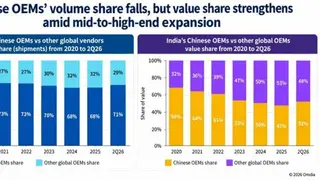
India remains key for Chinese OEMs but the market is shrinking, with shipments expected to decline 13% in 2026 and further in 2027. Their combined share fell from 77% in 2020 to 71% in Q2 2026. Success now depends on higher ASPs, better retail, and premium positioning rather than just volume.
The contraction stems from multiple pressures converging at once. Memory component costs have climbed, the rupee has weakened against major currencies, and inflation has squeezed household budgets, all of which push handset prices upward just as entry-level buyers grow more price-sensitive. Replacement cycles have also lengthened, meaning consumers hold onto devices longer before upgrading.
India's weight in individual Chinese brands' global operations remains substantial, with realme particularly exposed at 42 percent of its worldwide shipments. The competitive picture shows Samsung holding ground across all price tiers while Apple's financing and trade-in programs draw premium buyers, leaving Chinese vendors squeezed between a resilient Korean rival and an expanding American one.
The shift could reshape how millions of Indian consumers access smartphones. If Chinese brands pivot toward premium devices, budget-conscious buyers may face fewer affordable options, potentially slowing digital inclusion in a market where smartphones serve as primary internet gateways. However, the same pressure could spur more aggressive financing and trade-in programs, making higher-tier devices attainable. Retailers and local manufacturing partners tied to Chinese OEMs may also feel employment effects as volume strategies give way to value-focused approaches.