Medicaid Managed Care Enrollment Drops 5.5% Year Over Year
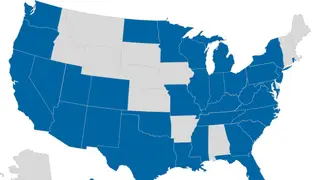
HMA analysis of 34 states shows Medicaid managed care enrollment fell to 59.2 million in June 2026, a decline of 3.5 million (5.5%) from June 2025. The broader Medicaid/CHIP population declined similarly, with CMS data showing a 5.9% decrease. The findings set a baseline before new eligibility policies from the Working Families Tax Cut Act take effect, including community engagement requirements and more frequent redeterminations.
The enrollment contraction was uneven across states. While Mississippi, Nevada, and South Carolina posted modest gains, Arizona, Indiana, and Louisiana each saw declines ranging from roughly 10% to 21%. Expansion states bore the brunt, losing 3 million members (5.9%), compared to a 3.8% drop among non-expansion states.
The data arrives ahead of significant policy shifts. Under the Working Families Tax Cut Act, most states must implement community engagement requirements and six-month redeterminations for certain adults starting January 2027. Meanwhile, market concentration persists—Centene, Elevance, UnitedHealth, and Molina together control 42.6% of enrollment—and one national MCO has already exited a state market, citing profitability concerns.
The enrollment decline could signal tightening access to coverage for low-income families, particularly in expansion states where new community engagement rules and more frequent redeterminations may accelerate disenrollment. Millions of adults could lose coverage or face administrative hurdles, potentially straining safety-net providers and hospitals that rely on Medicaid reimbursement. Plan exits from unprofitable markets may reduce choice and disrupt care continuity for remaining enrollees, though the full impact depends on how states implement the new federal requirements.