Google tests AI chips in orbit for space data centers
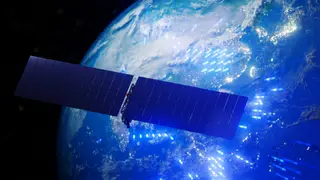
Google is preparing to send its TPU chips into space to evaluate their performance in orbit. This experiment could pave the way for AI computing in space. The test aims to assess hardware reliability beyond Earth.
The experiment marks a notable step toward moving advanced computational workloads off Earth's surface. Google's tensor processing units, designed for machine-learning tasks, will face radiation, temperature extremes, and microgravity conditions that cannot be fully replicated in ground-based testing. By assessing how these specialized chips perform in orbit, engineers can gather data on thermal management, power efficiency, and fault tolerance in a demanding environment.
This effort sits within a broader push to develop space-based data processing infrastructure. Satellites currently rely on downlinking raw data to Earth for analysis, which introduces latency and bandwidth constraints. If AI hardware proves reliable in orbit, future missions could process imagery, sensor readings, and other information directly in space, reducing dependence on ground stations and enabling more autonomous operations.
If successful, this testing could reshape how data from satellites and future space missions is handled. Organizations relying on Earth observation, communications, or scientific research may benefit from faster on-orbit analysis, reducing delays in decision-making. It could also lower the cost and complexity of transmitting large datasets back to Earth. However, the broader impact depends on whether such chips prove durable and cost-effective in space, and whether this approach becomes accessible beyond major tech firms.