Mangled Victorian coin offers glimpse into steam-era minting mishap
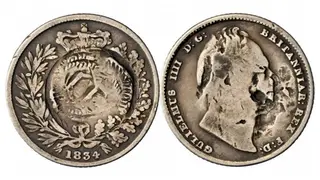
A heavily distorted 1834 British sixpence bearing the portrait of King William IV has been identified as a rare physical record of a minting error. The coin's extreme deformation, detailed in a study published in npj Heritage Science, is difficult to explain through normal wear or damage. Its condition provides insight into the challenges of steam-powered coin production in the 19th century.
The coin's unusual state—a sixpence struck in 1834 during William IV's reign—has drawn scholarly attention because its severe distortion cannot be explained by ordinary circulation or routine handling. Researchers examining the piece found its condition points to a failure during the striking process itself, rather than decades of use or accidental damage.
The study, published in npj Heritage Science, connects the artifact to the transition toward steam-powered minting equipment in the 1800s. That new machinery brought greater efficiency but also introduced novel mechanical failures. Physical evidence of such production errors is exceptionally rare, giving this specimen particular value for reconstructing the realities of early industrial coinage.
This finding could refine how museums and collectors interpret damaged historical coins, helping specialists distinguish genuine minting failures from post-production wear. Numismatists may reassess similar specimens in their collections, while the public could gain a more tangible appreciation for the mechanical limits of early steam technology. The broader societal impact likely remains modest, though it may enrich educational narratives about industrial-era craftsmanship and the hidden imperfections behind everyday objects.