U.S. Envoys Attempt to Restart Nuclear Talks With Iran as Regional Conflict Escalates
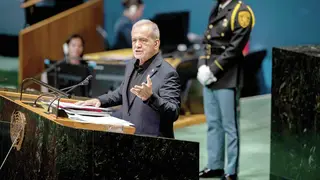
Secretary of State Marco Rubio said American negotiators tried to initiate discussions with Iran on its nuclear program during side meetings at a United Nations summit. The diplomatic push comes as Iran's Houthi allies continue offensives, widening a conflict that began with U.S. and Israeli attacks on Iran in February. Rubio also stressed that Iran's control of the Strait of Hormuz must be addressed.
The U.S. diplomatic effort unfolded during the U.N. General Assembly, with Steve Witkoff and Jared Kushner meeting Iran’s foreign minister, Abbas Araghchi, in a session mediated by Qatar. Secretary of State Marco Rubio characterized the exchange as a continuation of prior talks, not a breakthrough, while noting that Iran’s seizure of the Strait of Hormuz remains a key U.S. concern.
The meeting follows President Trump’s threat to “annihilate” Iran absent a war-ending deal. Iran’s president, Masoud Pezeshkian, had earlier vowed defiance over its civilian nuclear program but left room for negotiations. Meanwhile, the Houthis’ ongoing offensive has widened the conflict that began with U.S.-Israeli strikes in February, and Iran’s Revolutionary Guard has gained power after senior leaders were killed.
This diplomatic overture may signal a fragile window for de-escalation, but the outcome could shape regional stability for years. Gulf states and global energy markets are directly affected by Iran’s control of the Strait of Hormuz, while civilian populations in Yemen and Iran face continued warfare. Success could reduce oil-price shocks and humanitarian fallout; failure may deepen a multi-front conflict, drawing in more actors and straining international alliances. The talks’ impact hinges on whether hard-line factions in Tehran accept any negotiated terms.