Perseverance Data Reveals Multiple Water Alteration Episodes in Jezero Crater
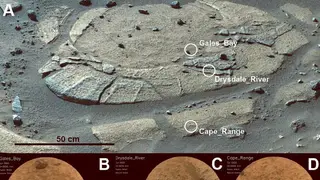
Using Perseverance rover data, scientists analyzed the Margin unit in Jezero crater and found it originated as an olivine-rich igneous rock. They identified three separate fluid-driven alteration events: carbonate-rich deposits, silica precipitation, and hydrothermal veins of fluorite and calcium-sulfate. These findings reveal a complex watery history and enhance the site's potential for preserving ancient life.
The Margin unit's rocky band traces the inner rim of Jezero crater, a 45-kilometer-wide basin that sits within the much larger Isidis impact structure. Perseverance's SuperCam instrument examined more than 185 rock targets there, revealing that the unit began as igneous rock formed from slowly cooling magma deep underground. That origin itself is notable, since orbital observations had previously suggested the carbonates seen from space formed through direct lake interactions.
The three distinct alteration episodes each left different mineral signatures: carbonate ridges from carbon-dioxide-rich fluids, silica precipitated into pore spaces by shifting water chemistry, and younger fractures filled with fluorite and calcium-sulfate veins from hydrothermal activity. Some rocks also showed physical reworking by shoreline or debris-flow processes. Because Jezero sits within one of Mars' largest carbonate exposures, these findings extend beyond the crater itself, and the silica enrichment in rocks below the ancient waterline strengthens the case for the site's astrobiological value.
This research could sharpen the scientific community's assessment of which Martian samples warrant return to Earth, since Perseverance's collected specimens are prime candidates for future missions. The evidence of multiple watery episodes may also influence how planetary scientists model early Mars' climate and habitability, potentially reshaping public understanding of whether microbial life could have persisted there. For space agencies planning sample-return logistics, these findings could help prioritize targets, though the practical benefits remain tied to ongoing mission outcomes.