Two New Sea Spider Species Found in Salish Sea, One Carrying Its Own Parasites
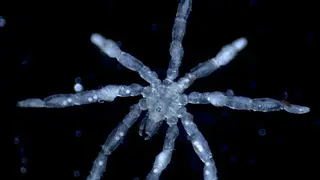
Researchers at the University of British Columbia identified two new sea spider species in the Salish Sea through scuba diving and genetic analysis. One species has distinctive red eyes and hairy legs, while the other is a parasite that hosts even smaller parasites. The findings highlight how targeted underwater sampling can uncover hidden marine biodiversity.
Sea spiders are ancient marine chelicerates, emerging about 500 million years ago, predating true spiders. They are typically tiny and cryptic, making them hard to spot and often superficially similar. Few researchers specialize in them, so discoveries are rare. The Salish Sea, between British Columbia and Washington, has particularly understudied sea spider populations.
The study, using scuba diving from September 2023 to August 2024, employed microscopy and genetic sequencing to detail seven species, including two new ones. Callipallene pilosuspedes has red eyes, hairy legs, and a three-lipped mouth; its ovigers, normally for carrying eggs, were seen grooming. Tanystylum kiixin, named after an Indigenous village site, is a parasite that carried smaller parasites, and its smaller ovigers hinder grooming. Published in Organisms Diversity & Evolution.
This discovery may underscore how much marine biodiversity remains undocumented, potentially guiding conservation priorities for the Salish Sea. It could also encourage more targeted sampling methods like scuba diving in other understudied regions. The parasite-host relationship may deepen understanding of ecological interactions, which could inform future research on marine parasite dynamics. Society may gain increased awareness of ocean life, though the immediate impact is likely confined to scientific communities.