Netherlands Slashes 2040 Hydrogen Demand Forecast by 57%
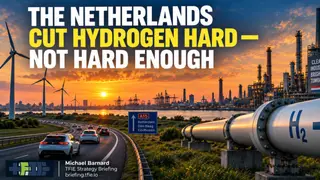
The Netherlands reduced its 2040 gaseous hydrogen demand projection from about 460 petajoules to roughly 200 petajoules, a 57% cut. Electrification is displacing hydrogen across power, heat, buildings, and transport, with electricity expected to supply 52% of final energy by 2040. The remaining hydrogen demand still assumes substantial growth, but synthetic fuel production shifts toward imports from regions with cheaper renewable electricity.
The revised plan reflects a sharp reassessment of hydrogen economics. Earlier Dutch analyses projected renewable hydrogen at roughly €1.70 to €4.70 per kilogram by 2030, but bids into the first European Hydrogen Bank auction averaged about €9.80 per kilogram, with Dutch 2040 estimates now around €6.70 to €6.80. This cost reality reshaped where synthetic fuel production occurs, with the Netherlands now expecting imports of energy-rich intermediates from regions offering cheaper renewable electricity.
Despite the dramatic cut, the remaining 200 PJ forecast still represents meaningful growth. Current gaseous hydrogen demand sits near 130 PJ, concentrated in refining, ammonia, and chemicals. The revised 2040 target implies roughly 1.7 million tonnes annually, a 54% increase from today, though far below the discarded 460 PJ vision of 3.8 million tonnes. Electrification drives the shift, with electricity expected to supply 52% of final energy by 2040.
The Netherlands' hydrogen forecast cut could signal a broader European recalibration of hydrogen expectations, potentially affecting infrastructure investments, pipeline planning, and storage projects designed around larger demand scenarios. Industries currently planning hydrogen-dependent operations may face uncertainty, while electricity grid expansion and heat pump adoption could accelerate. Energy consumers may benefit from lower costs if electrification proves cheaper than hydrogen pathways, though workers in hydrogen supply chains could face adjustment pressures as the transition shifts direction.