US Defense Department seeks $30M for AI-driven credibility assessment program
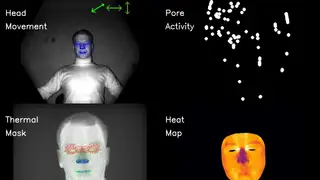
The Department of Defense has requested $30.3 million over five years for a program called Polygraph+ that would use AI and machine learning to score polygraph results and enable remote physiological sensing. The initiative aims to modernize federal lie-detection for employee vetting and insider-threat detection, but experts warn that AI-enabled lie detection lacks scientific validity and may be worse than traditional methods. The budget request has not yet been approved by Congress.
The program's technical core combines AI-driven scoring with standoff sensing, which would read physiological signals without physical contact. This builds on 2023 Defense Innovation Unit prototypes from Presage Technologies and Altec Research, which used cameras to track heart rate, breathing, facial temperature, and head movement. The DCSA intends to apply these tools to employee vetting and insider-threat detection, though specific technologies remain undisclosed.
The initiative arrives amid intense leak investigations, including recent polygraph tests for dozens of Joint Staff officers after press reports on weapons stockpiles. Yet traditional polygraphs have faced decades of scientific criticism—a 2003 National Research Council report found limited evidence for their screening use. Legal scholar Kyri Kotsoglou calls the effort a misguided attempt to reduce complex human behavior to measurable signals.
If approved, this program could affect thousands of federal employees and job applicants, who may face new forms of remote physiological monitoring during vetting. The reliance on AI scoring could introduce biases or false positives, potentially damaging careers and eroding trust in security processes. While proponents may see it as a tool against leaks, the lack of scientific validity could lead to unjust outcomes, and the technology's remote nature raises privacy concerns for those under scrutiny.