Vertical quantum sensor operates in extreme magnetic fields
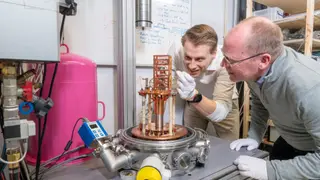
Researchers at the University of Twente have built a vertical quantum sensor capable of functioning in magnetic fields 20,000 times stronger than Earth's. This design allows measurements in extreme conditions. The sensor could enable new applications in materials science and physics.
Quantum sensors exploit atomic-scale effects to detect fields with exceptional precision, but conventional designs often fail under extreme conditions. This new vertical architecture from the University of Twente reorients the sensing element, allowing it to withstand magnetic fields roughly 20,000 times stronger than Earth’s ambient field. Such resilience opens a practical path for probing materials and phenomena that were previously inaccessible to quantum measurement techniques, bridging a gap between laboratory physics and extreme-environment applications.
This breakthrough could benefit researchers studying superconductors, exotic magnets, or high-field physics, where standard sensors distort or break down. It may also accelerate development of compact instruments for industrial or medical imaging in strong-field settings. Over time, improved quantum sensing in harsh conditions could lead to more precise diagnostics and new material discoveries, though widespread adoption depends on cost and scalability.