Sarah Jones Channels Two Dozen Americans in Trauma-Filled Solo Show
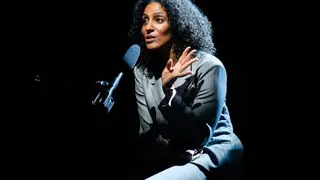
Sarah Jones's solo performance features nearly twenty distinct characters, each with unique accents and backgrounds, united by a tendency to argue and carry trauma. The show, commissioned by Oxford University, ties personal stories to America's political history and the upcoming Declaration of Independence anniversary. Jones blends humor with pointed commentary on current political efforts to erase certain narratives.
The production runs 100 minutes at the Theatre for a New Audience, where an interactive lobby display invites audience members to write down moments they find beautiful about America, with responses ranging from Knicks victories to river landscapes. Jones's characters include a slave woman subjected to breeding, a ten-year-old Irish immigrant factory worker, a Japanese-American internment survivor, and her closeted gay son, alongside an incarcerated Black man and his conservative brother. The show's title derives from a podcast Jones launched during the 2024 election cycle, and it repeatedly invokes the Declaration of Independence's opening lines as a framing device.
Commissioned by Oxford University's Unfinished Revolutions series, the piece connects to the upcoming 250th anniversary of the Declaration of Independence. Jones draws heavily on her own multiracial, multi-religious family for comedic characters, including a Jewish relative and a Dominican-Puerto Rican cousin who jokes about the theater's gentrified atmosphere. The show explicitly positions itself against current political efforts to remove certain narratives from the Smithsonian Institution.
The show arrives amid ongoing national debates over which stories institutions preserve, and its timing around the Declaration's 250th anniversary could amplify conversations about historical memory. Audiences may find themselves reflecting on how personal trauma intersects with political identity, potentially fostering more nuanced discussions about patriotism and accountability. The production's mix of humor and serious monologues could make difficult historical subjects more accessible to general theatergoers, though its rapid-fire characterizations may limit deeper engagement with any single narrative.