Google Outlines How AI Data Centers Can Support Power Grids
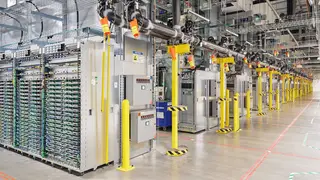
At Data Center World Power, Google's Tom Garvens explained how full-stack design, low-voltage DC power, battery energy storage, and liquid cooling are changing hyperscale AI data centers. The approach allows these facilities to act as grid partners rather than just backup power users. The article says these technologies support local electricity grids.
At Data Center World Power, Google’s Tom Garvens described how integrated system architecture, lower-voltage direct-current distribution, on-site battery storage, and liquid-based cooling are reshaping very large AI computing facilities. These design choices, he suggested, let such sites do more than draw power and serve as emergency backup.
Instead, the article reports, they can operate in ways that assist local electricity networks. The piece, published by Data Center Knowledge and written by Drew Robb, frames this shift as a move from being merely a heavy power consumer to becoming a more cooperative participant in grid operations.
If these approaches spread, nearby communities and grid operators may see data centers that help balance demand rather than only strain it. Electricity customers could benefit from improved reliability or lower infrastructure pressure, though outcomes may depend on local rules, utility planning, and how often facilities actually provide support. Technology vendors, cloud providers, and energy managers may also face new design and operational expectations.