Indo-Pacific Brief: China SMR Network, Taiwan Philippines Mission, India UPI in Uzbekistan
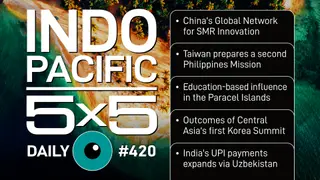
China launched a Global Network for Small Modular Reactor Innovation to coordinate voluntary cooperation among governments, regulators, firms, and researchers. Taiwan is preparing to open a second quasi-diplomatic mission in the Philippines. The roundup also covers education influence in the Paracel Islands, Central Asia's first Korea summit, and India's UPI launch in Uzbekistan.
China’s new Global Network for SMR Innovation is described as a voluntary, non-profit, unincorporated cooperation body meant to work alongside the IAEA. It plans a governing board, secretariat, committees and working groups, with a first assembly later this year; confidentiality rules apply and intellectual property is to be settled by consultation. Chinese firms highlighted the ACP100/Linglong One and CGN’s 200 MWt HuaPeng-1, projected at 36 months and 10 hectares.
Taiwan is preparing a second quasi-diplomatic office in the Philippines, reportedly in Cebu, as ties deepen despite no formal recognition. The roundup also notes Paracel Islands education, Central Asia’s first Korea summit, and India’s UPI launch in Uzbekistan.
The SMR network may influence how smaller nuclear projects are regulated and deployed, affecting utilities, regulators, researchers and host communities. Taiwan’s planned Philippines office could improve consular, trade and travel links for businesses and citizens, while also adding a sensitive diplomatic dimension to regional security. The other roundup items—education in the Paracels, Central Asia-Korea ties and UPI in Uzbekistan—may gradually affect local students, migrants, merchants and digital-payment users.