Lunar Cities Would Need Extreme Water Recycling to Survive
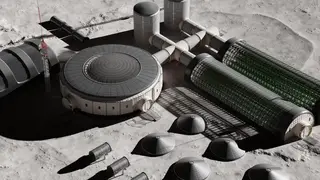
A feasibility estimate calculated water and electricity demands for lunar cities housing 100,000 or 1 million people. Even with a generous 1 billion tons of water, no recycling would exhaust the supply within a few years, while 98% recycling could stretch it past a century for a million residents. Because current lunar water estimates are about one-thirtieth of that amount, a small city might run out in roughly a decade, though smaller settlements could last centuries.
Lunar polar craters act as cold traps. Their floors have avoided direct sunlight for about four billion years, staying near or below 110 kelvin. Ice there sublimates extremely slowly—roughly a millimeter per billion years—so deposits persist. Nearby sunlit rims receive almost constant light, and one-kilometer solar towers could yield about three gigawatts.
A feasibility estimate considered cities of 100,000 or 1 million. With a billion tons of water and no recycling, supplies last only years. At 98% recovery, a million people might stretch that reserve just past a century. Current lunar water estimates are about one-thirtieth as large, so a small city could run dry in roughly ten years, while 1,000–10,000 residents might last centuries.
The story could influence how space agencies, private firms, and researchers plan lunar settlements. If water is as limited as estimated, city size and growth may depend on near-total recycling, solar power at polar rims, and mining or importing additional ice. Future residents could face strict water budgets, while advances in closed-loop life support may also benefit water-scarce communities on Earth.