Browser Emulation Brings Apple's Canceled Copland OS Back to Life
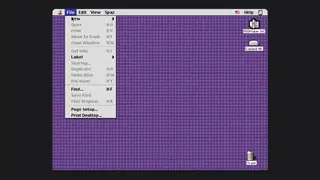
Reverse-engineering researcher Michael Steil has created a browser-based emulation of Apple's unreleased Copland operating system. Copland was announced in the mid-1990s to modernize the Mac but was canceled in 1996 after management issues and feature creep. Some of its work later appeared in Mac OS 7.6 and Mac OS 8, while its failure helped set the stage for Mac OS X.
Michael Steil, who reverse-engineers old hardware and software, adapted DingusPPC, an open-source Power Mac emulator, to run Copland. He needed eleven patches to fix startup crashes and make the abandoned system boot reliably. A browser-hosted version now lets people explore it without vintage hardware, and the patches are available for study.
Apple announced Copland in the mid-1990s as a modernization effort for the Mac, aiming at better multitasking, protected memory, and interface advances. Management troubles and expanding features led to cancellation in 1996. Portions later surfaced in Mac OS 7.6 and 8, while the failure helped create conditions for Mac OS X.
This emulation may give historians, developers, and retro-computing fans a hands-on way to study a canceled chapter of Mac history. It could also encourage more browser-based preservation of fragile, unreleased software, making rare systems accessible without obsolete hardware. For Apple users, it may deepen understanding of how today's macOS lineage emerged from earlier failures. Its broader impact is likely modest, but it may strengthen public interest in software archiving and emulation.