NASA Completes Pre-Launch Testing of Dual-Mode Propulsion CubeSat
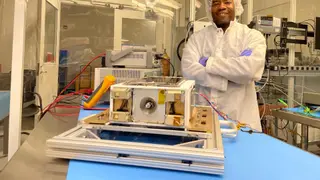
Engineers at NASA's Marshall Space Flight Center finished a series of environmental and physical tests on a small satellite for the ASCENT Propulsion Dual Mode mission. The shoebox-sized craft is meant to show that one non-toxic fuel tank can supply both a high-thrust combustion engine and low-thrust electrospray thrusters. The project, managed by NASA Marshall, includes hardware from MIT, Plasma Processes, and Georgia Tech, and aims to cut mass and volume for future missions.
NASA Marshall engineers have finished ground checks on a small CubeSat for the ASCENT Propulsion Dual Mode demonstration. The craft is designed to draw from one shared tank of a non-toxic propellant, supplying both a combustion engine for strong thrust and electrospray thrusters for efficient, gentle maneuvers.
The mission involves MIT electrospray hardware, a Plasma Processes chemical module, and a Georgia Tech-integrated spacecraft bus. Testing at Marshall's Small Spacecraft Servicing and Integration Lab included helium leak checks in a vacuum chamber, thermal vacuum exposure, and spin testing to prepare the 6-U CubeSat for low Earth orbit.
If successful, this dual-mode propulsion approach could lower launch mass and volume for small satellites, potentially making space missions more affordable and accessible to researchers, startups, and educational institutions. Safer non-toxic propellants may reduce handling hazards for ground crews and simplify operations. The technology may also free payload space for science and communications, though its broader societal benefits will depend on future adoption and mission results.