Al Gore Sees 2026 as Possible Pivot for Climate Policy
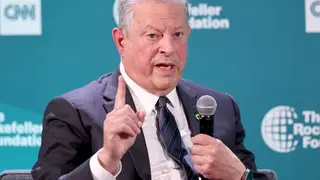
In an interview ahead of Climate Week NYC and the U.N. General Assembly, former vice president Al Gore said this year could mark a shift toward stronger climate action. He acknowledged that atmospheric carbon dioxide and global temperatures have continued to rise since An Inconvenient Truth, with warming now near 1.5 degrees Celsius above preindustrial levels. Gore remains optimistic that humanity can avoid the worst effects if it chooses to act.
Gore’s 2006 film warned about fossil-fuel use and warming. Two decades later, atmospheric carbon dioxide has increased and global temperature has risen roughly 0.7 degrees Celsius since then. Current warming is near 1.5 degrees Celsius above preindustrial levels, the threshold in the 2015 Paris agreement. The U.N. has cautioned that the world may exceed it.
Gore highlighted cheaper solar electricity, declining battery prices, wind, electric cars, and solar generation moving ahead of coal in China and the U.S. He also noted a second worldwide jolt to fossil-fuel supplies and prices within four years. He said available technologies could halve emissions in ten years.
If 2026 becomes a policy pivot, investors, energy companies, workers, and households could see faster shifts in power generation, transport, and fuel costs. Regions facing heat, flooding, and other climate hazards may benefit most from stronger action, while fossil-fuel-dependent communities could face disruption. International cooperation may shape how quickly and fairly these changes unfold. The actual impact remains uncertain because pledges and technologies must be implemented at scale.