DART's Asteroid Impact Remembered Four Years Later
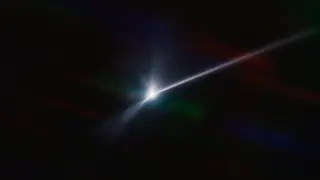
On September 26, 2022, NASA's DART spacecraft deliberately struck the small asteroid Dimorphos at about 22,000 km/h. The collision shortened Dimorphos's orbit around Didymos by 33 minutes, far exceeding the mission's success threshold. ESA's Hera probe is expected to reach the Didymos system soon to study the aftermath.
DART weighed 570 kilograms and launched on a Falcon 9 from Vandenberg on November 24, 2021. Its target was Dimorphos, a 160-meter moonlet circling Didymos; their mutual eclipses let telescopes time the smaller body's 11-hour, 55-minute orbit. The mission cost $325 million and carried Italy's LICIACube, a briefcase-sized CubeSat that photographed debris after impact.
During final approach, SMART Nav guided autonomously. Dimorphos first appeared as a tiny smudge, then the algorithm shifted aim from Didymos and locked on. DART hit only about 17 meters from the moonlet's midpoint at roughly 6.1 km/s, and LICIACube passed about 57 km away minutes later.
The DART result may strengthen public and institutional confidence that asteroid deflection is technically feasible, at least for a small moonlet. Researchers and space agencies could use Hera's follow-up to refine models of impact outcomes, while policymakers may weigh whether such capabilities justify further investment. For the wider public, the event could make planetary defense feel more tangible, though it does not remove the