Atmosphere-Breathing Plasma Thruster Could Keep Satellites Aloft in Very Low Orbit
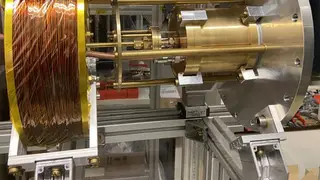
Francesco Romano’s doctoral work at the University of Stuttgart proposes an atmosphere-breathing electric propulsion system that captures thin upper-atmospheric gas and turns it into plasma to generate thrust. The approach could let satellites in very low Earth orbit counteract drag without carrying conventional propellant, though laboratory tests and models have not yet demonstrated mission-level performance. A major obstacle is atomic oxygen, which can corrode engine components such as electrodes, grids, and cathodes.
Romano’s doctoral research at the University of Stuttgart, shared on arXiv, explored an atmosphere-breathing electric propulsion concept. In very low Earth orbit, about 100–450 km up, residual air causes drag, so satellites typically need onboard propellant such as xenon to maintain altitude.
His intake tests compared funnel, diffuse, and specular designs; the parabolic specular version captured roughly 94.3% of test particles and lost only 8% efficiency at a 15-degree tilt. The thruster uses a radio-frequency helicon design with a birdcage antenna inspired by MRI hardware, avoiding a neutralizer.
If proven in orbit, this concept could affect satellite operators, Earth-observation and communications users, and space sustainability efforts. By potentially reducing onboard propellant needs, VLEO missions may become more feasible or longer-lived, improving imaging and lowering some power demands. However, atomic-oxygen erosion and unproven mission performance mean any societal benefit remains uncertain. Researchers and manufacturers may be most immediately affected as they test materials and designs.