Three cities to vote on ranked-choice voting for local elections in November
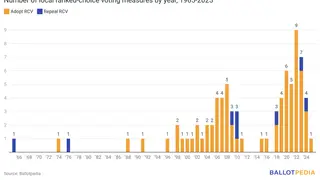
On Nov. 3, voters in Irvine, California; Honolulu, Hawaii; and Longmont, Colorado, will decide whether to adopt ranked-choice voting for mayoral and city council elections. Honolulu's measure would also apply the system to electing the city's prosecuting attorney. All three measures were placed on the ballot by city councils, and this year's total of local ranked-choice measures is three.
The three November questions differ in legal form. Honolulu’s Question 5 and Longmont’s Question 3C would change city charters, while Irvine’s Measure D is an ordinance. Honolulu’s proposal extends beyond mayor and council to the prosecuting attorney. Each was referred by its city council.
Nationwide, ranked-choice voting remains uneven. Alaska and Maine use it for some federal and statewide races, while Hawaii uses it for certain statewide contests. Five states allow it locally. Forty-one localities plus Washington, D.C., use or plan to use it; D.C. and Oregon’s Multnomah County start this year, and six more localities plan 2027 starts. Nineteen states ban it.
If adopted, these measures could alter how voters in Irvine, Honolulu, and Longmont evaluate candidates, since ranking may encourage broader coalitions and second-choice appeals. Candidates might campaign differently, while election offices may need new tabulation procedures and voter education. Honolulu’s prosecuting attorney contest could also be affected. The results may shape how other local governments view ranked-choice voting, though effects would depend on implementation and voter familiarity.