NASA advances PRIMA far-infrared observatory toward construction
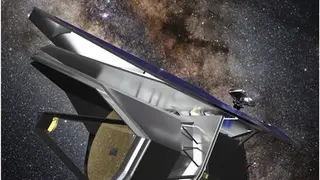
NASA has moved the Probe far-Infrared Mission for Astrophysics, or PRIMA, into Phase B development, allowing design and budget reviews to proceed. The observatory would use a cryogenically cooled 1.8-meter telescope along with an imaging polarimeter and a high-resolution spectrometer to study far-infrared light. Its project cost is capped at $1.2 billion, excluding launch and other non-project expenses, and it is targeted to launch in 2033.
NASA has placed PRIMA in Phase B, a stage that permits continued preliminary design work and technical and budgetary scrutiny. The mission introduces Probe Explorers, a new category within the agency’s Explorers Program, and involves JPL, Goddard, Marshall, Caltech’s IPAC, plus partner agencies from Canada, France, Germany, Japan, South Korea, and the United Kingdom.
PRIMA’s planned payload includes a 1.8-meter cryogenically cooled telescope, the PRIMAger imaging polarimeter, and the FIRESS high-resolution spectrometer. Its project cost is capped at $1.2 billion, excluding launch and other non-project expenses, with launch targeted for 2033. Detector technology draws on three decades of Caltech and JPL research.
PRIMA may expand access to far-infrared observations, helping astronomers study planet, star, and black hole formation and cosmic water origins. Its international partnerships could strengthen scientific collaboration and train researchers in detector and instrument work. The public may benefit indirectly through new knowledge and technology spillovers, though concrete societal effects remain uncertain and depend on mission success, cost control, and data accessibility.