Nepal Flood Survivors Confront Climate Injustice After Glacier Disaster
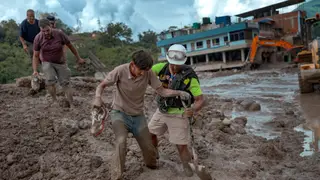
A deadly glacier collapse and flood in Nepal in August killed at least 1,300 people and caused damage estimated at more than $4 billion. Researchers with World Weather Attribution found that climate change played a very strong role by melting ice, thawing permafrost and increasing rainfall. In an interview, Nepali climate justice activist Tanuja Pandey discusses the disaster’s aftermath and the burden on a country with very low greenhouse gas emissions.
In August, a Himalayan glacier collapse triggered floods across Nepal and Tibet. The disaster killed at least 1,300 people, and Nepal’s estimated losses may surpass $4 billion—more than a tenth of its GDP. World Weather Attribution researchers linked the event to climate change, citing ice melt, permafrost thaw and heavier rain that weakened the glacier.
Tanuja Pandey, a Kathmandu-based lawyer and climate justice activist, comes from Sudur Paschim, one of the affected regions. She co-founded and chairs Harin Nepal, an intersectional climate justice group. Nepal’s greenhouse gas emissions are under 0.02 percent of the global total.
The floods’ aftermath could weigh heavily on survivors and affected communities, who may face grief, displacement, lost livelihoods and costly rebuilding. Because estimated damages exceed a tenth of Nepal’s GDP, recovery may strain public resources and household stability. The disaster may also sharpen wider discussion about how countries with minimal emissions experience severe climate impacts, though the precise social and political effects will depend on aid, governance and long-term adaptation.