Trump Turns Down Iranian Offer to Reopen Hormuz Strait
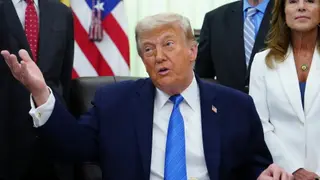
President Donald Trump rejected Iran's offer to reopen the Strait of Hormuz immediately, saying Iran is losing badly, but he indicated openness to future negotiations. Iran's foreign minister had signaled willingness to resume nuclear talks within seven days if the U.S. lifted its naval blockade. The strait, a key route for global oil shipments, has been effectively closed since the war began.
Trump rejected Iran’s proposal to reopen the Strait of Hormuz while suggesting future talks remain possible. Iranian Foreign Minister Abbas Araghchi offered nuclear discussions within seven days if Washington ended its naval blockade, imposed after a July ceasefire collapsed. The strait has been largely shut since the war began, with both sides issuing conflicting claims about control.
During the U.N. gathering, Iranian President Masoud Pezeshkian departed New York after indirect talks with U.S. officials. Saudi Arabia said it intercepted another missile blamed on Iranian-backed Houthis in Yemen. Pezeshkian challenged Trump’s threat to “annihilate” Iran but said Tehran still welcomed diplomacy.
The standoff could keep energy markets tense, since the Strait of Hormuz is a vital oil route; higher shipping and fuel costs may affect consumers and industries worldwide. Regional populations near the waterway and in Yemen may face continued security risks. If talks resume, diplomats and mediators could gain space to reduce escalation, but failure may deepen uncertainty for governments, businesses, and households dependent on stable energy flows.