PixelMob Portable AI Workstation review: a compact creative hub with trade-offs
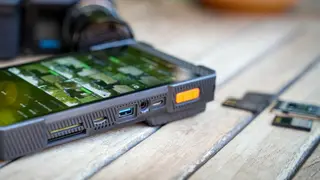
The PixelMob is a portable Android-based workstation aimed at photographers, videographers, and other creators. It combines a 7-inch OLED touchscreen, expandable M.2 storage, card slots, and editing plus tethered-shooting tools in a 550g device. The review praises its features and storage flexibility but criticizes plasticky build quality and workflow quirks.
The PixelMob has a 7-inch OLED screen at 1,100 nits, Android, 12GB LPDDR5 RAM, and 256GB storage. Three M.2 bays allow up to 24TB expansion, while CFexpress Type B, SD, and microSD slots cover common camera media. Ports include USB-A, USB-C, HDMI input/output, LAN, and a headphone jack. A Sony NP-F-compatible external battery supplements the 11,600mAh internal cell.
Reviewer notes firmware setup took about an hour, and an SD card took five to ten seconds to appear. A Lightbox must be created before files can be managed, an early workflow hurdle. Built-in apps include Lightbox, Sequence, Cones, and Framebox; users can also install CapCut, Lightroom, and DJI software. A Type B-to-Type A adaptor is included.
Devices like the PixelMob could affect freelance photographers, videographers, and small production crews by moving backup, editing, and tethered shooting into a pocketable Android hub. That may reduce reliance on laptops and cloud uploads in the field, speeding some travel and location workflows. However, build-quality concerns and inconsistent CFexpress support may keep it a niche tool rather than a mainstream replacement. Its reception could also shape how compact creator workstations balance expansion, portability, and software polish.