Ancient Carbon Signature May Reflect Local Processes, Not a Global Shift
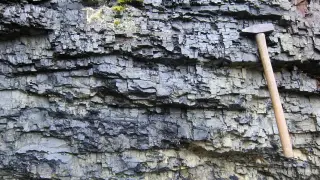
A Caltech-led study challenges the long-held view that a 2-billion-year-old carbon-isotope signal from Russian rocks records a planetwide change in Earth's carbon cycle. Gases trapped in microscopic pockets suggest the signal could instead stem from local magma, hydrocarbons, and methane-consuming microbes within a relatively small sedimentary basin. The work complicates interpretations of how oxygen transformed early Earth.
The debate concerns rocks from Karelia's Zaonega Formation and Gabon's Francevillian Basin, where an isotopic anomaly called the Shunga-Francevillian event has been read as a worldwide carbon-cycle disturbance. Caltech-led work instead examined gas sealed in tiny rock cavities at the Russian site, an exceptionally old petroleum system.
Those gases suggest the anomaly could arise from basin-scale processes—magma, hydrocarbons, and microbes that consumed methane—within an area of a few hundred square kilometers. If so, the Russian core may not document a global shift, complicating reconstructions of early Earth's oxygenation.
This finding may mainly affect researchers, science communicators, and educators who interpret early Earth history. If accepted, it could make textbook narratives about oxygenation and global carbon cycling more cautious, and may influence how geologists assess other ancient isotopic records. For broader audiences, it could subtly shift understanding of how scientists reconstruct planetary change from limited local samples.