Ancient Capybara Fossil Rewrites Atacama Desert’s Dry History
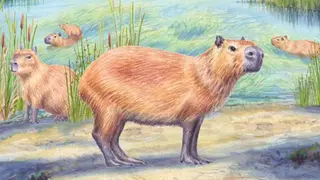
A fossil tooth from an extinct relative of modern capybaras was found in marine sediments in northern Chile and dates to roughly 9 million years ago. The find challenges the view that the Atacama Desert has been continuously arid for about 40 million years, suggesting the region once had wetlands.
The tooth came from El Morro, within Chile’s Bahía Inglesa Formation, where sediments accumulated in a shallow sea roughly 10–7 million years ago. It is coastal Chile’s earliest known capybara record, and no capybaras inhabit the country today.
Microscopic silica plant remains, or phytoliths, preserved alongside the fossil point to palms and other flowering plants. That botanical evidence supports the idea that the now-arid Atacama coast once included wetlands, unlike its present landscape.
This find may reshape how scientists and the public interpret the Atacama’s climate history, potentially influencing paleoclimate research, museum exhibits, and local fossil heritage efforts. Residents near El Morro could see greater interest in documenting and studying fossils, while educators may use the capybara as a vivid example of past wetlands. It may also encourage collaboration between paleontologists and communities, though broader economic or policy effects remain uncertain.