Mars’ Missing Carbonates May Be Buried Beneath the Surface
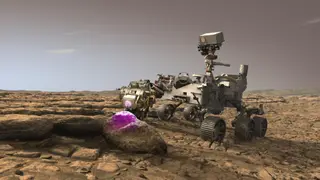
A geochemical modeling study led by JAXA and University of Tokyo researchers proposes that many of Mars’ carbonate rocks could be stored underground. Feldspar-rich surface rocks appear to show signs of past water and carbonate interaction, while groundwater may have carried carbonates downward. The findings could help explain the scarcity of carbonate rocks on Mars despite strong evidence that the planet once had abundant water.
The investigation combined orbital and rover observations with one-dimensional thermochemical simulations. Researchers modeled how water altered mafic versus feldspar-rich rocks on early Mars, tracking mineral dissolution and new mineral formation across timescales from a few years to 100,000 years.
Feldspar-rich rocks produced calcium- and iron-rich carbonates under most modeled conditions, while mafic rocks shifted toward magnesium-rich carbonates after brief alteration. Groundwater moving downward formed carbonates more efficiently than standing water, suggesting buried carbonate deposits may await discovery.
This research may shape how planetary scientists and future missions search for past water and carbonate deposits on Mars. If carbonates are buried, drilling or subsurface sensing could become more important, affecting mission planning, instrument development, and public interest in Mars exploration. It could also inform understanding of carbon cycling on rocky planets, though any societal benefits remain indirect and speculative.