Andromeda Image Shows Raw Data Versus Processed View
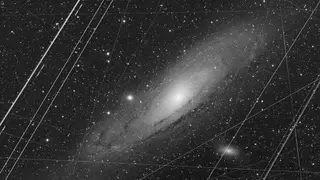
The Astronomy Picture of the Day compares two versions of the Andromeda galaxy. The first is a stack of 223 long exposures taken in 2019 from Portugal, showing airplane, satellite, cosmic-ray, and sensor artifacts. The second version uses several astronomy software tools to reduce those Earthly defects and better reveal the galaxy's actual appearance.
The Astronomy Picture of the Day presents a before-and-after comparison of the Andromeda galaxy, also called M31. The raw version combines 223 exposures, each five minutes long, captured in 2019 from a garden observatory in Portugal. It contains airplane and satellite trails, cosmic-ray streaks, and faulty pixels.
The processed version was refined using Astro Pixel Processor, DeepSkyStacker, and PixInsight. The goal was not to fabricate a new look, but to lessen interference from Earth and camera defects so the galaxy’s genuine appearance is clearer.
This comparison could help amateur astrophotographers and general audiences see that space images often require processing to remove local interference. It may strengthen trust in astronomy communication by showing why raw and refined views differ. Educators and outreach groups could use it to explain how satellites, aircraft, and sensor flaws affect observations, while reminding viewers that careful editing aims at clarity rather than fantasy. Its impact is likely modest but useful for public understanding of how cosmic images are made.