How close can asteroids, comets, and spacecraft get to the sun?
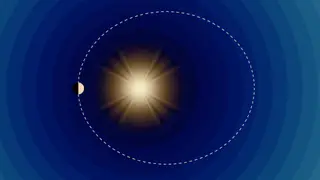
Mercury reaches about 29 million miles (47 million kilometers) from the sun at perihelion, but some Mercury-crossing asteroids travel much closer. The current known record holder, 2024 YL3, has a perihelion of roughly 6.4 million miles (10.3 million kilometers). Hypothetical Vulcanoids, if they exist, might orbit even nearer to the sun inside Mercury's path.
Mercury’s perihelion is about 47 million kilometers, yet Mercury-crossing asteroids can swing far nearer. Their stretched orbits suggest they were scattered inward from the main asteroid belt rather than forming near the Sun. The known record holder, 2024 YL3, is a roughly 141-meter object with a perihelion near 10.3 million kilometers.
Proposed Vulcanoids might orbit inside Mercury’s path, with models placing stable orbits between about 8.98 million and 37.39 million kilometers from the Sun’s center, though searches have found no evidence. NASA’s Parker Solar Probe, launched in 2018, reached a perihelion of about 7.3 million kilometers from the Sun’s center on its final primary-mission orbits.
Findings about near-Sun objects could sharpen solar research and asteroid tracking, affecting astronomers, spacecraft engineers, and observatories. Closer perihelion records may inspire public interest in astronomy and inform mission planning, though hypothetical Vulcanoids remain unconfirmed. Space agencies and researchers may use such data to assess thermal and orbital hazards, while educators could use the extremes to explain solar system dynamics.