Classified Space Force Launch Adds to Rapid Starshield Deployment
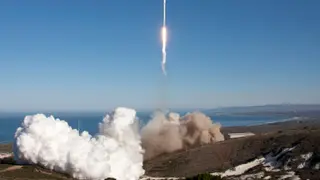
SpaceX launched the classified USSF-385 mission from Vandenberg on September 26, the fourth Space Force launch from that pad in roughly six weeks. Independent trackers observed stage drop zones consistent with Starlink Group 15 missions, pointing to a fast Starshield constellation buildout. Crew-13 also arrived at Kennedy Space Center for an October 1 ISS launch after a Dragon oxidizer leak delayed the flight.
The Sept. 26 USSF-385 flight lifted off from SLC-4E at Vandenberg at 7:00 a.m. PT. Booster B1100 completed its tenth landing on Of Course I Still Love You, only 35 days after a Starlink Group 15 mission. This was the fourth Space Force launch from that pad in about six weeks, following USSF-366, USSF-153, and USSF-259.
USSF-366 and USSF-153 each yielded 23 cataloged satellites; USSF-259 placed 17 in a different orbital plane. USSF-385's payload remains unidentified, though its trajectory resembles Starshield. Independent observers saw stage drop zones matching Starlink Group 15 patterns.
The rapid Starshield buildout could affect satellite internet users, astronomers, and space-traffic monitors by increasing orbital congestion and observation challenges. Classified payloads may limit public transparency, while independent trackers and conjunction warnings could shape how researchers and operators assess collision risks. Crew-13's delayed ISS flight may remind the public that commercial human spaceflight schedules remain vulnerable to technical faults. Broader access to space may depend on how safely these dense constellations are managed.