Maria Ressa on Confronting Big Tech’s Threat to Democracy
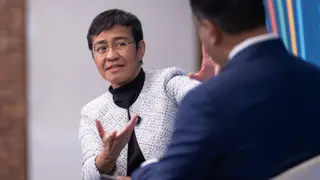
Nobel laureate Maria Ressa argues that major technology companies undermine democracy by monetizing attention and weakening news media. In a conversation with Foreign Policy, she discusses her forthcoming book on citizen resistance to authoritarianism and her work on the U.N. AI advisory panel. The interview was recorded at FP’s Tech and AI Forum during the U.N. General Assembly.
Maria Ressa, a Filipino American journalist and 2021 Nobel Peace Prize winner, is interviewed by Foreign Policy editor in chief Ravi Agrawal. The discussion occurred at FP’s Tech and AI Forum during the U.N. General Assembly. Ressa is co-chair of the U.N. Scientific Panel on Artificial Intelligence and has a forthcoming book, The Fight Back: A Citizen’s Guide to Standing Up to Dictators.
She describes AI’s public rollout in stages: social media’s machine-learning micro-targeting roughly a decade ago; large language models from 2022–2023, which are probabilistic rather than factual; and chatbots that altered information feeds, producing what she calls AI slop. A third phase is being addressed by the U.N. panel.
Ressa’s warnings may intensify public scrutiny of how technology platforms shape attention, news viability, and democratic debate. Citizens, journalists, and policymakers could face greater pressure to evaluate AI-generated content and address news media’s weakening business models. Her U.N. role and book may influence international discussions on AI safeguards, though concrete policy effects remain uncertain. The interview could also elevate debates about whether governance can keep pace with rapid technological change.