Red-Painted Glyphs in Mexican Cave Linked to Teotihuacan Rituals
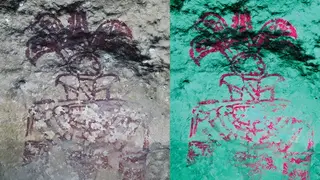
Three red-painted glyphs found in a cave at Chalcatzingo, Mexico, indicate that Teotihuacan rituals took place there between the fourth and sixth centuries CE. Chalcatzingo is known for Olmec-style art, most of which dates to about 900–500 BCE, and lies between two volcanic hills in Morelos. The discovery connects a later Teotihuacan presence to an older ceremonial site.
A cave at Chalcatzingo, Mexico, yielded three glyphs painted red. Their presence points to Teotihuacan-linked rituals held there from the fourth through sixth centuries CE. Chalcatzingo lies in Morelos between two volcanic hills. It is recognized for Olmec-style art, largely dated to roughly 900–500 BCE.
This evidence connects a later Teotihuacan footprint with a much earlier ceremonial center. It places a later ritual presence at a site already significant in an older era.
This find may spark broader public curiosity about Mexico's ancient past and could draw more attention to Chalcatzingo and Teotihuacan research. Local communities, museums, and tourism-related businesses might benefit from increased interest, while scholars may revisit connections between distant ceremonial centers. Any impact would depend on further study and careful interpretation, since one discovery does not settle larger historical questions.