Malibu’s Famous Surf Break Faces Sand Loss and Climate Risks
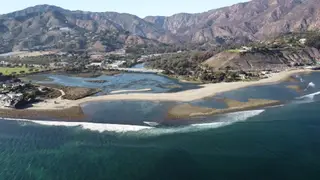
A new study finds that iconic surf breaks around the world are vulnerable to climate change, while Malibu faces a more immediate problem of severe sand loss. Dams, seawalls, and paved rivers have cut off sediment that once rebuilt the beach, causing Surfrider Beach to narrow and its waves to change. With a strong El Niño winter approaching, the exposed coastline has few defenses.
Malibu’s First Point was one of 57 surf breaks assessed by scientists and the group Save the Waves in a Climatic Change study. The research found that globally significant breaks are vulnerable to climate change, with many at medium or high risk from lost shoreline resilience and sea-level rise. Malibu appeared on that list.
The break’s shape depends on cobbles and sand carried by Malibu Creek over millennia. Dams, seawalls, and paved rivers now block that sediment. As the beach narrows, high tides near Pacific Coast Highway, and the wave’s three points have merged into one, bringing more crowding and tension.
Malibu’s changing shoreline could affect surfers, residents, visitors, and businesses tied to beach tourism, as narrower sand and altered waves may reduce the break’s cultural and recreational value. With a strong El Niño forecast, exposed areas near Pacific Coast Highway may face greater flooding or wave damage, potentially disrupting travel and local commerce. The study’s global findings may also prompt coastal communities to reconsider how sediment loss and sea-level rise shape the places they depend on.